What Does a Pelvic Organ Prolapse Feel Like?
If you’ve noticed a feeling of pressure, heaviness, fullness, or a bulge in your vagina, you may be wondering, “Could this be pelvic organ prolapse?”
Maybe it feels like something is sitting lower than it used to. Perhaps you notice more pressure after a long day on your feet, during exercise, or after lifting something. You might even feel like you have a tampon that isn’t sitting quite right.
These sensations can be unsettling, but you’re certainly not alone.
Pelvic organ prolapse is common, and it can feel different for everyone. Some people experience very noticeable symptoms, while others have a prolapse with few or no symptoms at all.
Understanding what pelvic organ prolapse is and what a prolapse can feel like is an important first step in knowing when to seek support.
What is pelvic organ prolapse?
Pelvic organ prolapse occurs when one or more of the pelvic organs move downward from their usual position and create a bulge into the vagina.
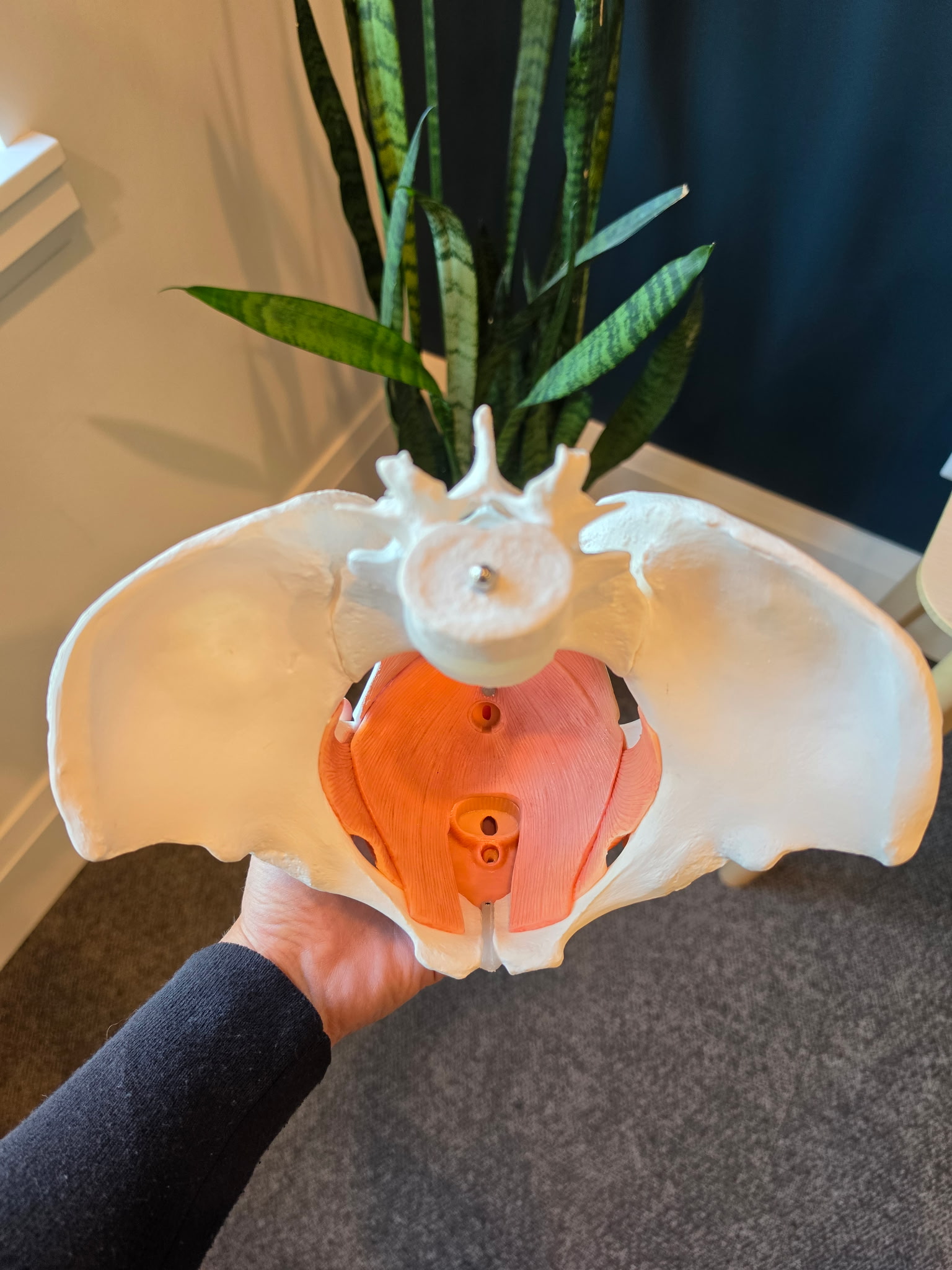
The pelvic organs include the bladder, uterus, and rectum, as well as the upper part of the vagina. These structures are supported by the pelvic floor muscles, connective tissues, and ligaments.
When that support system is stretched or weakened, a pelvic organ can move downward and press against the vaginal walls.
Because different structures can be involved, the symptoms of pelvic organ prolapse can vary considerably from person to person.
What does pelvic organ prolapse feel like?
People describe the sensation in different ways, but common experiences include:
- A feeling of pressure or heaviness in the pelvis
- A sensation of something “falling down”
- Fullness in the vagina
- A feeling that something is sitting lower than usual
- A vaginal bulge or lump
- A dragging or pulling sensation
- Increased pressure after standing for a long time
- A feeling of pressure during exercise or lifting
- Changes in bladder or bowel function
With a prolapse, you may experience just one of these symptoms, several of them, or none at all.
A feeling of pelvic pressure or heaviness
Pelvic pressure and heaviness are common symptoms of pelvic organ prolapse.
You might describe it as feeling like there is weight in your pelvis or like something is pulling downward. Some people notice very little in the morning but become increasingly aware of pressure or heaviness as the day goes on.
You may also notice the sensation more after:
- Standing for prolonged periods
- Walking
- Running
- Exercising
- Lifting
- Coughing
- Straining with bowel movements
This doesn’t necessarily mean that your prolapse is suddenly getting worse. Symptoms can fluctuate depending on your activity level, bowel habits, and the amount of pressure placed on your pelvic floor.
It may feel like something is falling out
Another common description is the feeling that something is falling out or sitting at the vaginal opening. You might notice a sensation of a tampon slipping down, even when you aren’t wearing one.
Some people notice this feeling when they are:
- Getting dressed
- Showering
- Using the bathroom
- Exercising
- Squatting
- Bending over
In some cases, you may actually be able to feel or see a bulge near the vaginal opening. A vaginal bulge does not necessarily mean that an organ has completely “fallen out.” Pelvic organ prolapse occurs along a spectrum, and the amount of movement can vary.
What does a vaginal bulge feel like?
A vaginal bulge may feel like a small lump, fullness, or mild pressure inside the vagina.
Some people only notice it when they bear down, cough, exercise, or have a bowel movement. Others may notice it throughout the day.
You might also notice that the sensation changes depending on your position. For example, you may feel relatively comfortable lying down but notice more pressure when you’re standing.
If you’ve noticed a new vaginal bulge, it’s worth having it assessed rather than trying to determine the cause on your own.
Can pelvic organ prolapse cause bladder symptoms?
Yes. Depending on the type and location of the prolapse, some people experience changes in bladder function.
These may include:
- Feeling like you can’t completely empty your bladder
- Difficulty starting your urine stream
- A slower urine stream
- Needing to urinate more frequently
- A sudden or urgent need to urinate
- Urine leakage with coughing, sneezing, exercising, or other activities
However, bladder symptoms can have many different causes. Having urinary symptoms doesn’t automatically mean you have pelvic organ prolapse.
If you’re experiencing bladder changes alongside pelvic pressure, heaviness, or a vaginal bulge, an assessment with a pelvic health professional can help determine what’s contributing to your symptoms.
Can prolapse affect bowel movements?
Yes. Pelvic organ prolapse can sometimes affect bowel function as well.
You may notice:
- Difficulty passing stool
- More straining during bowel movements
- A feeling that your bowel hasn’t completely emptied
- Needing to return to the bathroom shortly after a bowel movement
- Pressure or fullness in the vagina or rectum
Some people with a posterior vaginal wall prolapse find that they need to use gentle pressure around the vaginal or perineal area to help with bowel emptying.
Constipation and other bowel conditions can cause similar symptoms, so these symptoms aren’t necessarily caused by prolapse.
What does prolapse feel like during exercise?
This is an especially important question for active women.
You may notice pelvic pressure or heaviness during activities such as running, jumping, lifting weights, or high-impact exercise. Some people describe a sensation of their pelvic floor feeling “heavy” or unsupported during or after a workout. Others can exercise with no changes to their symptoms, or even improvement.
If this sounds familiar, it doesn’t necessarily mean you need to stop exercising. Instead, a pelvic health physiotherapist can help you understand your symptoms and explore ways to modify your breathing, lifting technique, exercise intensity, or movement patterns so that you can comfortably continue participating in activities that are important to you.
Can prolapse cause pain?
Pelvic organ prolapse is generally not painful.
For many people, the primary symptoms are pressure, heaviness, fullness, or a feeling of a vaginal bulge rather than pain.
However, some people may experience pelvic discomfort, lower back discomfort, or discomfort during sexual activity.
Pain can also have many causes unrelated to prolapse, so experiencing pelvic pain doesn’t necessarily mean you have a prolapse.
If you’re experiencing persistent or concerning pelvic pain, it’s important to have it properly assessed.
What if you don’t have any symptoms?
You can have a pelvic organ prolapse without experiencing any noticeable symptoms.
Some prolapses are discovered during a pelvic examination when the person wasn’t experiencing any particular concerns.
It’s also important to understand that the degree of prolapse seen during an examination doesn’t always correspond directly with how someone feels. In other words, a small prolapse can sometimes cause significant symptoms, while a more noticeable prolapse may cause very few symptoms.
Does pelvic pressure or heaviness always mean prolapse?
No. Pelvic pressure, heaviness, urinary symptoms, bowel changes, and vaginal discomfort can have many possible causes.
Your pelvic floor muscles themselves can also contribute to symptoms. Some people have pelvic floor muscles that are weak, while others have muscles that are overly tense or have difficulty relaxing and coordinating with movement. Pregnancy and childbirth, constipation, hormonal changes, bladder conditions, changes in activity, and other pelvic health concerns can also play a role.
That’s why symptoms alone cannot diagnose pelvic organ prolapse.
When should you see a pelvic health physiotherapist?
You don’t have to wait until your symptoms become severe before asking for help.
Consider booking an assessment if you’re experiencing:
- A new sensation of pelvic pressure or heaviness
- A vaginal bulge or lump
- A feeling that something is falling out
- New bladder symptoms
- Difficulty emptying your bowel
- Discomfort during sex
- Pelvic symptoms during exercise
- Symptoms that are affecting your everyday activities
- Symptoms that are worrying you or interfering with your quality of life
Getting assessed doesn’t mean you’re committing to a particular treatment. It’s simply an opportunity to understand what’s happening in your body and learn what options may be available to you.
How can pelvic floor physiotherapy help with prolapse?
Pelvic floor physiotherapy can be an important part of managing pelvic organ prolapse and its symptoms.
Your physiotherapist will assess your pelvic floor muscle strength, endurance, relaxation, coordination, breathing patterns, movement strategies, and how your symptoms respond to different activities.
Your treatment may include:
- Pelvic floor muscle training
- Learning how to relax and coordinate your pelvic floor
- Breathing and pressure-management strategies
- Exercise modifications
- Guidance for lifting and other physical activities
- Strategies for bowel and bladder health
- Education about prolapse and symptom management
- Support with returning to activities you enjoy
And pelvic floor physiotherapy isn’t simply about doing more Kegels. The right pelvic floor exercise program depends on your individual body and symptoms. Some people need strengthening, while others may benefit from learning how to relax and coordinate their pelvic floor muscles more effectively.
You don’t have to figure this out on your own
If you’ve been noticing a heaviness, pressure, bulge, or other change in your pelvic area, it’s understandable to have questions.
You may be wondering whether it’s normal. You may be worried that exercise will make things worse. Or perhaps you’ve been quietly managing your symptoms because you’re not sure who to talk to.
You don’t have to figure it out on your own.
At Pure Pelvic Health, we believe pelvic health care should be supportive, practical, and free from embarrassment. Your concerns are valid, and you deserve to understand what’s happening in your body.
Written by: Pure Pelvic Health
Clinical Review by: Danielle van Andel, Pelvic Floor Physiotherapist