What Is the Pelvic Floor? Understanding Your Pelvic Floor and Why It Matters
When you hear the words “pelvic floor”, you might immediately think of Kegel exercises or bladder control. But the pelvic floor is much more than a group of muscles that helps prevent leaks. Your pelvic floor is an important part of your body’s core support system, helping to support your pelvic organs, control your bladder and bowel, contribute to sexual and reproductive function, and provide stability as you move through everyday life.
Just as importantly, a healthy pelvic floor isn’t simply a strong pelvic floor. These muscles need to be able to contract, relax, lengthen, and coordinate with the rest of your body to respond appropriately to the demands placed on them. Much of this happens automatically, without you consciously thinking about your pelvic floor throughout the day.
Pelvic floor concerns are common and can affect people of all ages and genders. They may occur during or after pregnancy and childbirth, with aging, following surgery or injury, or as a result of changes in the muscles, nerves, connective tissues, or other structures of the pelvis. Sometimes, pelvic floor symptoms develop without an obvious cause.
Understanding what the pelvic floor is and how it works is an important first step toward understanding your pelvic health.
So, What and Where Exactly Is the Pelvic Floor?
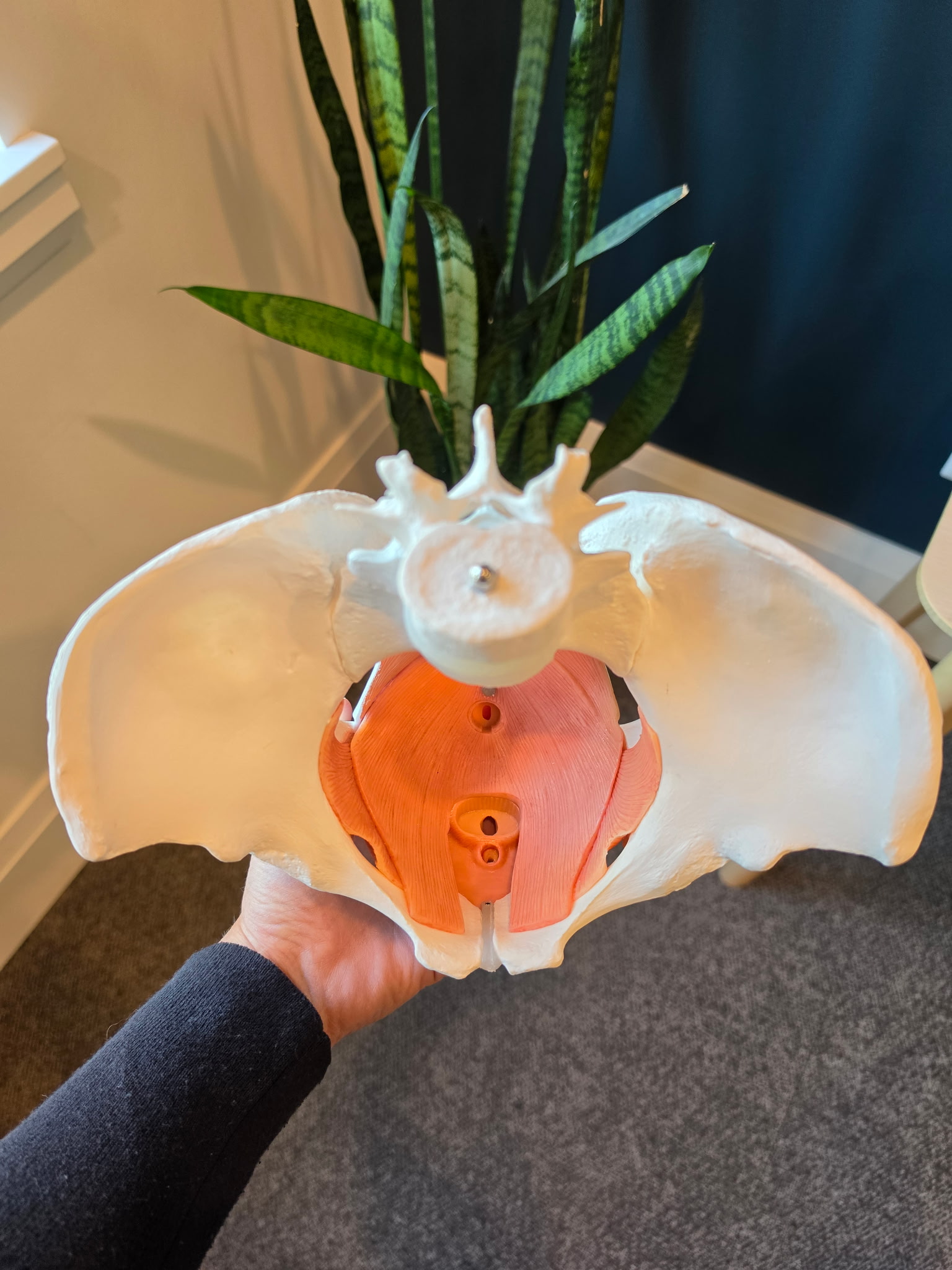
The pelvic floor is a group of muscles, connective tissues, and supporting structures located at the bottom of the pelvis.
Think of your pelvis as a bowl. Your pelvic floor forms the muscular base of that bowl, stretching from the pubic bone at the front to the tailbone at the back and from one side of the pelvis to the other.
The pelvic floor isn’t one single muscle. It is a complex group of muscles that work together to support the organs above them and control the openings that pass through the pelvic floor. These openings allow urine and stool to leave the body and, depending on your anatomy, are also involved in reproductive and sexual function.
The pelvic floor also works closely with the abdominal muscles, diaphragm, back muscles, hips, and other muscles around the pelvis. Together, these structures help manage pressure within the abdomen and provide support for the spine and pelvis.
This is one reason pelvic floor health isn’t simply about doing more pelvic floor exercises. The muscles don’t just need to be strong; they need to work as part of a larger system.
What Does the Pelvic Floor Do?
The pelvic floor has several important functions. Some of the most significant include:
-
Supporting the Pelvic Organs
One of the primary roles of the pelvic floor is to help support the organs within the pelvis. Your pelvic floor provides a muscular base for these structures and works together with connective tissue and other supporting tissues to help keep them in their appropriate position.
When the pelvic floor and surrounding support system are not functioning effectively, some people may experience a feeling of pressure, heaviness, or bulging in the pelvis. In some cases, this may be associated with pelvic organ prolapse.
Pelvic organ prolapse occurs when one or more pelvic organs move downward from their usual position and can sometimes create a sensation of pressure or a bulge in the vagina or rectum.
-
Controlling the Bladder
Your pelvic floor plays an important role in urinary continence, or your ability to control when you urinate. The pelvic floor muscles help support the bladder and urethra and can contract when needed to prevent urine leakage.
For example, you may use your pelvic floor muscles to control your bladder when you:
- Cough or sneeze
- Laugh
- Jump or run
- Lift something heavy
- Change position
- Exercise
When the pelvic floor functioning is not optimal, some people experience urinary leakage, urgency, frequency, difficulty emptying the bladder, or other urinary symptoms.
-
Supporting Bowel Function
The pelvic floor is also involved in bowel control. The muscles around the rectum and anal canal help you control the passage of stool and gas. Just as importantly, these muscles need to be able to relax and lengthen when you have a bowel movement.
This means that a pelvic floor that is weak may result in incontinence of stool or gas. While a pelvic floor that is constantly tight or unable to relax properly can sometimes contribute to difficulty emptying the bowels.
Pelvic floor-related bowel symptoms can include:
- Constipation
- Straining
- Difficulty emptying
- A feeling of incomplete bowel movements
- Fecal or gas leakage
- Bowel urgency
Of course, not every bowel problem is caused by the pelvic floor. Diet, hydration, medications, gastrointestinal conditions, nervous system function, and many other factors can influence bowel health. However, pelvic floor function can be an important piece of the puzzle.
-
Contributing to Sexual Health and Function
The pelvic floor also has an important role in sexual health.
Pelvic floor muscles are involved in sexual sensation, arousal, orgasm, and the physical support of the pelvic and genital structures. Healthy sexual function requires the pelvic floor to be able to both contract and relax.
A pelvic floor that is overly tight or sensitive may contribute to pelvic or genital pain, pain with penetration, or discomfort during sexual activity.
On the other hand, a reduction in pelvic floor strength, coordination, sensation, or support may also affect sexual function.
-
Helping With Movement and Core Stability
Your pelvic floor is also part of your core muscle system.
Whenever you breathe, move, lift, exercise, cough, or change position, pressure inside your abdomen changes. The diaphragm, abdominal muscles, back muscles, and pelvic floor work together to respond to these changes.
This doesn’t mean you should constantly “brace” your pelvic floor or keep it contracted throughout the day. Instead, healthy pelvic floor function involves appropriate timing and coordination. The muscles should be able to contract when additional support is required and relax when relaxation is appropriate.
This ability to adapt to changing demands is an important part of normal pelvic floor function.
What Happens During Pregnancy and After Birth?
Pregnancy places significant physical demands on the pelvic floor.
As the uterus grows, the weight and pressure within the pelvis change. Hormonal changes also affect the body’s tissues, while pregnancy can change breathing patterns, posture, movement, bladder function, and bowel habits.
During vaginal birth, the pelvic floor muscles and surrounding tissues undergo significant stretching. A Caesarean birth does not eliminate the need to consider pelvic floor recovery either, as pregnancy itself can affect pelvic floor function.
After having a baby, some people experience urinary leakage, bowel changes, pelvic heaviness, pelvic pain, abdominal separation, pain with intercourse, or changes in sexual function.
What About Pelvic Pain?
Pelvic pain can be complicated because it doesn’t necessarily indicate that the pelvic floor is weak. In fact, some people with pelvic pain have pelvic floor muscles that are too tight, overactive, or unable to relax normally.
Pelvic pain can occur in many areas, including the lower abdomen, pelvis, hips, groin, tailbone, vulva, vagina, penis, testicles, rectum, or perineum.
Pelvic pain can also be associated with bladder, bowel, sexual, musculoskeletal, or neurological symptoms.
Because there are many possible causes of pelvic pain, an assessment should look at more than simply pelvic floor muscle strength.
Does Everyone Need to Do Kegel Exercises?
This is one of the biggest misconceptions about the pelvic floor.
No—everyone does not need to simply do more Kegels.
Kegel exercises are exercises that involve purposefully contracting the pelvic floor muscles. They can be helpful for some people, particularly when pelvic floor muscle weakness or poor muscle control is contributing to symptoms.
Pelvic floor rehabilitation is much broader than strengthening. While some people need to improve strength, others need to learn how to relax their pelvic floor. And some need to work on coordination, endurance, timing, breathing, or the relationship between the pelvic floor and other muscles.
In some cases, repeatedly squeezing the pelvic floor when the muscles are already overactive may actually make symptoms worse. The goal isn’t simply to have a stronger pelvic floor. The goal is to have a pelvic floor that can do what it needs to do, when it needs to do it.
What Are Some Signs That Your Pelvic Floor May Need Attention?
Pelvic floor symptoms can look very different from one person to another.
Some possible signs include:
- Leaking urine when coughing, sneezing, laughing, running, or exercising
- A sudden or difficult-to-control urge to urinate
- Frequently needing to urinate
- Difficulty emptying your bladder
- Constipation or excessive straining
- Difficulty emptying your bowels
- Leakage of stool or gas
- Pelvic pressure, heaviness, or a feeling of something “dropping”
- A bulge in or around the vagina or rectum
- Pelvic, genital, or tailbone pain
- Pain with sexual activity
- Difficulty relaxing the pelvic floor
- Changes in sexual function
- Pelvic floor symptoms during pregnancy or following childbirth
You don’t need to have severe symptoms before seeking help. Even relatively mild symptoms can adversely affect exercise, work, sleep, relationships, confidence, and quality of life. Addressing symptoms while they are still mild may actually be quicker, easier, and save you years of discomfort.
Pelvic Health Is Part of Your Overall Health
The pelvic floor doesn’t work in isolation. It is connected—both physically and functionally—to your diaphragm, abdominal muscles, hips, spine, nervous system, bladder, bowel, and sexual and reproductive systems.
Your pelvic floor health is part of your overall health and this is why pelvic health physiotherapy takes a broader approach than simply prescribing pelvic floor exercises. A pelvic health physiotherapist can assess how the muscles are functioning, how they coordinate with the rest of your body, and how your symptoms relate to your daily activities and goals.
Pelvic floor concerns are also not limited to one stage of life or one gender. Pelvic health physiotherapy can help people across the lifespan with a wide range of bladder, bowel, sexual, reproductive, and musculoskeletal concerns.
The Bottom Line
Your pelvic floor is a complex and important part of your body. It supports your pelvic organs, contributes to bladder and bowel control, plays a role in sexual function, helps manage pressure within your abdomen, and works with the rest of your core to support movement and stability.
If you are experiencing bladder leakage, bowel difficulties, pelvic pressure, pelvic pain, pain with sex, or changes following pregnancy or childbirth, these symptoms are worth discussing with a healthcare professional.
Pelvic floor concerns are common, but they don’t have to be something you simply learn to live with.
Want to Learn More About Your Pelvic Floor?
This article is a very brief introduction to the pelvic floor and some of the many ways pelvic floor function can affect your health and everyday life.
If you have pelvic health concerns, Pure Pelvic Health is ready to help you. Book an appointment with an experienced pelvic floor physiotherapist or explore our upcoming resources on urinary incontinence, pelvic organ prolapse, pelvic pain, pregnancy and postpartum recovery, bowel health, and sexual health to learn more about these specific areas of pelvic health.
Written by: Pure Pelvic Health
Clinical Review by: Danielle van Andel, Registered Physiotherapist